The study of kites helped the ancient Chinese to develop effective uses of what part of a ship?
The ancient Chinese were innovative and adamant. They met their daily needs by creating and innovating some of the most important and long-lasting items in history.
Aboriginal Chinese inventions engagement dorsum to the Paleolithic menstruum, and the Chinese were always alee of their contemporaries when it came to inventing valuable things.
They have given u.s. the four greatest inventions in the world – the compass, gunpowder, newspaper, and press, but the list doesn't stop there.
Hither are the top 18 (including 2 from the medieval menstruum) nigh famous Chinese inventions:
18. Papermaking (50–121 Advert)
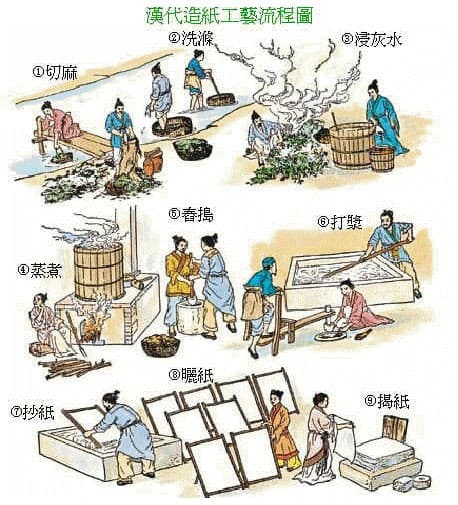
Earlier the invention of newspaper, people used different materials like wood, stone, and bone to write on. Effectually 2200 BC, the Egyptians discovered a blazon of reed called papyrus which could be used to write on by overlapping thin strips that had been soaked in water. The world "paper" was derived from papyrus.
Paper was invented in ancient China effectually 105 Advertisement during the reign of the Han emperor He Di by Ts'ai Lun (or Chai Lun), an official of the imperial court. However, a recent archeological survey indicates that paper had already been invented 200 years earlier and was used by the ancient Chinese war machine. Ts'ai Lun used the bark of the mulberry tree and pounded the fibers into a sheet. Later, he discovered that the quality of the newspaper could exist improved by adding hemp and old fish nets to the pulp. Presently, paper became the new writing cloth, and it simply took a few years before information technology was widely in utilize all over Red china. Later, paper was brought to the rest of the earth via the Silk Route.
17. Silk
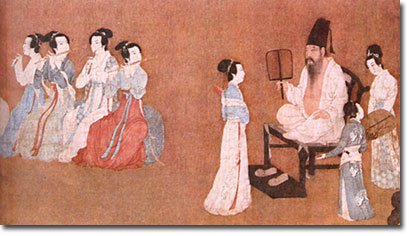
The invention of silk dates back to the fourth millennium BC during the Neolithic period. Apart from clothing, silk was widely used in a variety of sectors including writing, fishing, and for musical instruments. Silk was dominantly used by emperors and high-class guild but later it spread to the rest of the population. During the Han dynasty (202 BC–220 Advertising), silk became more than simply a commodity. It was used as a reward for a worthy Chinese citizen or government official.
Silk became an important office of the Chinese economic system. Japan and the Middle E started cultivating silk around 300 Advert and the Crusades brought the concept of silk production to Western Europe. This resulted in an economic boom and Chinese silk started to decrease in value and exports. Notwithstanding, China dominates the luxury silk market today.
xvi. Tea Production (2737 BC)
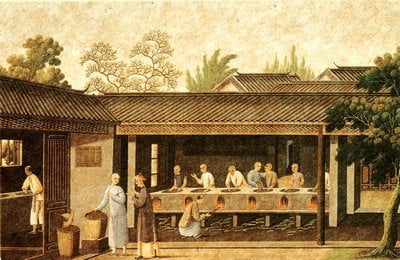
Tea was discovered in ancient Prc by the Chinese emperor Shennong in 2737 BC. Shennong liked to potable hot water. One twenty-four hour period during a march he and his army stopped to rest and his servant prepared some humid water for him. A brown leaf fell into the water and the water turned brown. The retainer presented information technology to the emperor, he drank information technology and establish it refreshing.
During the Han dynasty, tea was used as a medicine, and it was used equally a drink on social occasions from the Tang dynasty (618–907 Advertizement). Tea was prepared differently in ancient Communist china than information technology is today. Tea leaves were processed and compressed into cake grade. The dried teacake known as brick tea was ground in a stone mortar. The powder from the teacake was then boiled in a kettle, or hot h2o was added to it. It was then served every bit a hot drink. White tea (compressed tea) was produced during the Tang dynasty, and it was harvested in the early spring when the tea leaves were still silver needles.
fifteen. Kites
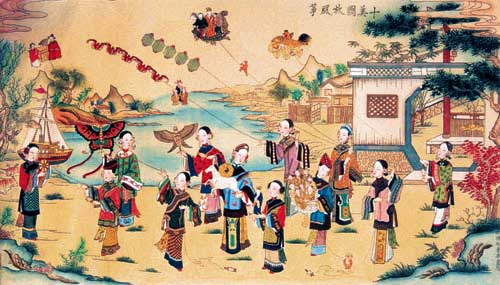
The Chinese were ahead of the rest of the globe in producing silk, and they used this silk to brand kites, calculation a resilient and lightweight bamboo framework to loftier tensile strength silk. Chinese philosophers Lu Ban and Mozi documented the commencement kite in aboriginal China in the fifth century BC. By 549 Ad, paper kites were being used to deport messages for rescue missions. During the medieval period, the Chinese used kites to test the current of air, measure distance, and for military communication.
See likewise:
Tiptop x Amazing Ancient Chinese Mythology Stories
14. The Seed Drill (250 BC)
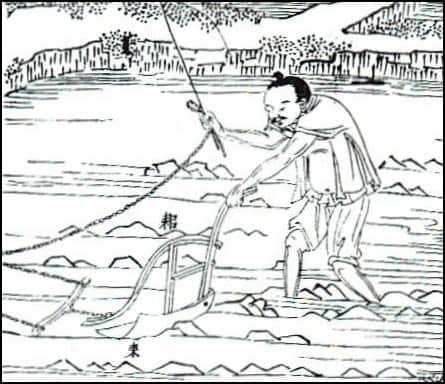
The Babylonians in ancient Mesopotamia invented single tube drills around 1500 BC, but these never reached Europe or Asia. Chinese farmers generally planted seeds past hand which was time-consuming and ineffective. Most of the seeds never germinated because of pests and the elements. The ancient Chinese constitute an alternative to this problem. During the Zhou dynasty, they discovered the seed drill that immune … Even so, it wasn't until the second century BC that they invented a multi-tube iron seed drill that helped them to produce food on a larger scale.
13. Deep Drilling (Second Century BC)
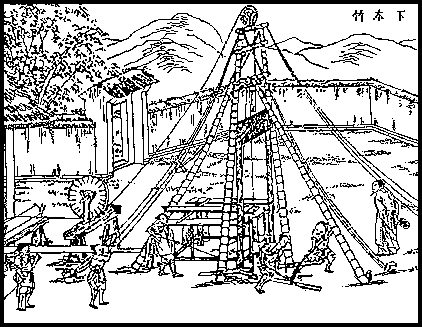
The Chinese developed drilling applied science to excerpt brine from beneath the earth'due south surface. It was developed in the landlocked province of Szechuan, around one,200 miles from the sea, in guild to become common salt from boreholes. Deep drilling borehole technology slowly improved, and the aboriginal Chinese were finally able to excerpt natural gas from the boreholes. The gas was carried by a bamboo pipe to its destination and then used every bit fuel. By the 11th century, the Chinese were able to drill boreholes over 3,000 feet deep. The same technology was used to drill the first petroleum well in California in the 1860s.
12. Porcelain
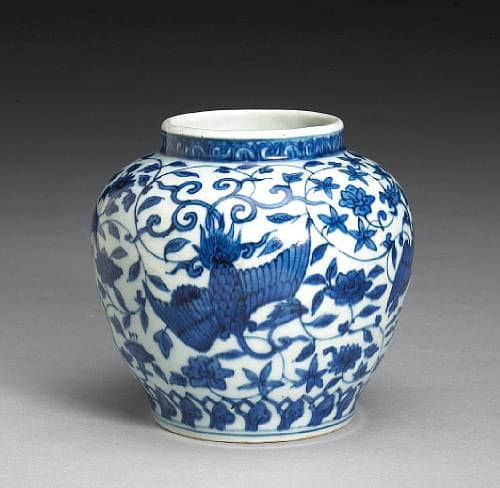
Porcelain was non a sudden invention, and an ancient form of porcelain existed during the Shang dynasty (1600 BC–1046 BC). It was perfected during the Tang dynasty and was exported to the Middle East. During the Vocal dynasty (960–1279 AD), the industry of porcelain became highly organized and reached new heights. By the time of the Ming dynasty (1368–1644 Advertising) porcelain was being exported to Europe, Africa, and Asia via the Silk Road.
eleven. The Compass
The Chinese considered s their cardinal direction, and the original compass was created past the Chinese using a lodestone to point south. This was chosen the south pointer. A lodestone is a blazon of mineral magnetite that aligns itself with the earth's magnetic field. The ancient Chinese discovered that a suspended lodestone could turn freely and would point towards the magnetic poles. During the Han dynasty, it was mainly used for geomancy and fortune telling. In the 11th century, during the Song dynasty, the Chinese figured out that the lodestone, which was primarily existence used as a divination tool, could also exist used to point a management for travelers. In the book Shorter Scientific discipline and Civilization in People's republic of china, Volume 3 written past Joseph Needham, information technology is stated that the Chinese began to apply the compass for navigation between the ninth and the 11th centuries.
10. Noodles
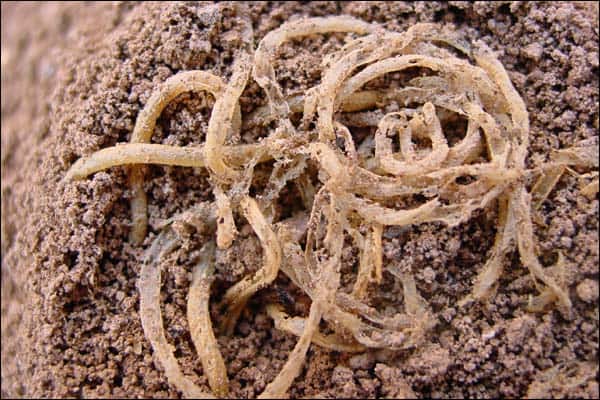
An archeological survey in 2002 at the Lajia site of the Qijia civilisation discovered some ancient noodles made of grains from millet grass. The 50cm-long yellow strands of noodles are predicted to exist iv,000 years old. Prior to this period, the primeval noodles were thought to have been eaten during the Han dynasty. At that place was a huge controversy over whether the Arabs, the Italians, or the Chinese commencement invented them.
See as well:
Top ten Traditional Ancient Chinese Foods
nine. Alcoholic Beverages
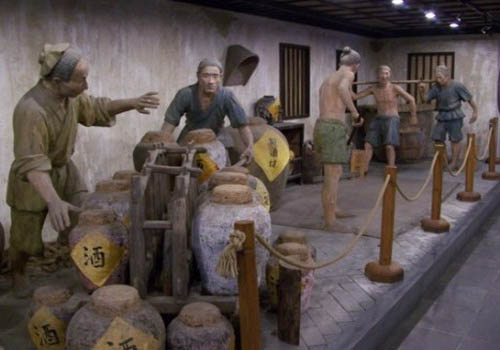
The consumption of beer began in ancient China around 9,000 years ago during the Neolithic menstruation. They used rice, hawthorn, honey, and grapes to make the beer. The 4 to v percent alcoholic beer was fabricated popular by Yi Di and Du Kang of the Xia dynasty. Various statuary vessels preserved from the Shang dynasty indicate that they had once independent alcohol.
8. Iron and Steel Smelting
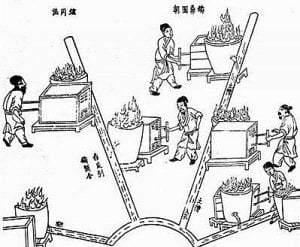
During the Paleolithic flow, the Chinese used arrowheads fabricated of stone for fishing and hunting. During the Neolithic period, conflicts began to ascend amidst unlike groups and the Chinese started to modify their farming and fishing tools into deadly weapons. During the Shang and Zhou periods, bronze smelting was perfected to create different weapons besides as tools for farming.
An Iron Age began in ancient Prc during the Zhou dynasty (1050 BC–256 BC) and atomic number 26 was used to create weapons, farming tools, and household products. During the Han dynasty private iron making was abolished, and the state began to monopolize the iron smelting industry.
The Chinese used different techniques for creating iron and steel weaponry. Their innovative techniques led to the rapid growth of the iron and steel industry in China. They invented diverse casting processes to produce crude iron, cast iron, wrought iron, tempering, and wrought steel that put them way ahead of other civilizations at that time.
7. The Wheelbarrow
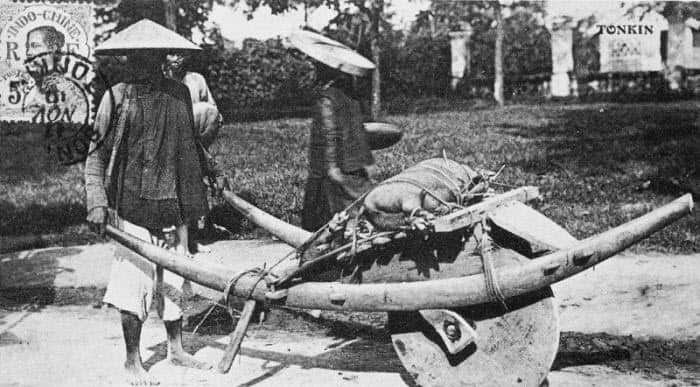
There is archaeological evidence of wheelbarrows in ancient China from the Han dynasty, as seen in Hui'southward tomb murals and brick tomb reliefs. Even so, the invention of the wheelbarrow can be credited to prime minister Zhuge Liang (181–234 AD) of Shu Han sometime between 197 and 234 AD. Liang created the wheelbarrow to carry military weapons and to move injured and expressionless soldiers from the battlefield.
There were ii types of wheelbarrow that were mutual: the front end-wheeled wheelbarrow and the centrally mounted wheel. The centrally mounted design didn't require a huge corporeality of energy to pull the wheelbarrow, the full weight beingness distributed every bit between the wheels and pullers. This made it convenient to use and these wheelbarrows were used mainly past builders, soldiers, traders, and farmers.
See too:
- Top 10 Ancient Roman Inventions
- Top eleven Inventions and Discoveries of Mesopotamia
- Acme ten Inventions and Discoveries of Aboriginal Greece
- Height 10 Inventions of the Mayan Civilization
- Tiptop 10 Inventions and Discoveries of Ancient Egypt
half-dozen. Acupuncture
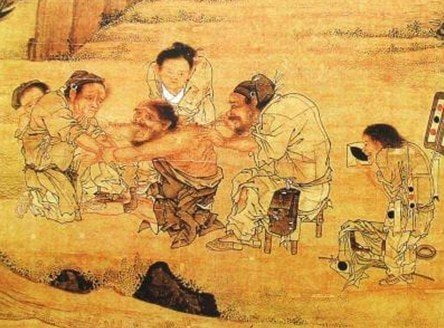
At that place is archaeological evidence that acupuncture was good in ancient China from the Paleolithic period. Dissimilar materials such equally stone knives and bamboo or bone needles used equally instruments of healing have all been excavated in China. Acupuncture was revolutionized during the menstruum of Huang Di, the Xanthous Emperor (2697–2597 BC). The earliest book of Chinese medicine is the Nei Jing and was written around 305 BC–204 BC. Information technology consists of a dialogue betwixt Huang Di and his physicist Qi Bo well-nigh the whole spectrum of the Chinese medical arts.
v. The Seismograph
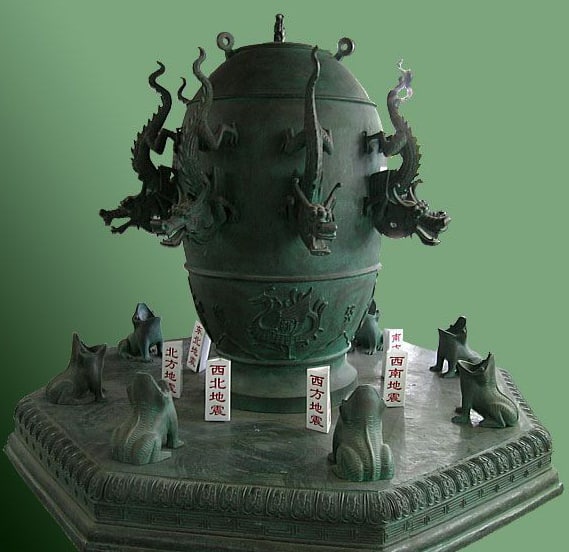
In 132 Advertizing, Zhang Heng (78–139 Advertising) of the Han dynasty invented the first seismograph called "Houfeng Didong" to measure the movements of the globe and seasonal winds. The seismograph was an urn-like instrument made of copper with a central pendulum. The viii dragons on the surface, each one holding the copper in its mouth, point out the eight unlike directions: e, south, west, northward, southeast, northeast, southwest, and northwest. When there was an earthquake, the dragon'southward mouth that was closest to the earthquake's source opened and the ball dropped into the mouth of the frog, producing a sound. This allow people know the direction of the earthquake.
4. The Dandy Wall
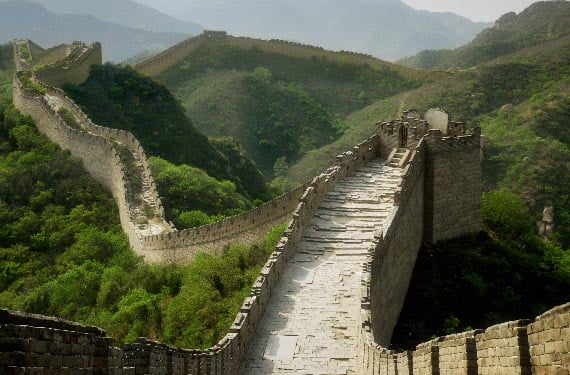
The Swell Wall of People's republic of china was congenital by the get-go emperor of China, Qin Shi Huang (260–210 BC) to protect the country from northern invaders. The 5,500-mile-long wall was built by slaves, criminals, and peasants. It is estimated that millions of people worked to build the Great Wall over a catamenia of 1,000 years. Most of the Smashing Wall that nosotros can encounter today was congenital during the Ming dynasty. Glutinous rice flour was used as a binding cloth to bind the bricks.
3. The Silk Road
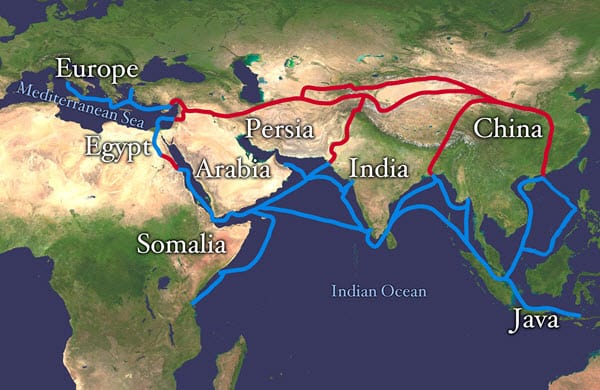
The Silk Route was an ancient trading route used past merchants, traders, and urban center dwellers linking Asia to the Mediterranean. The history of the Silk Route can be traced back to the Han dynasty. The name "Silk Road" came into existence due to the lucrative silk industry that exported silk all over the world. The Silk Road was 6,400 miles long and considered an of import development, enabling the silk industry to flourish.
Chinese Inventions During the Medieval Menses:
ii. Gunpowder
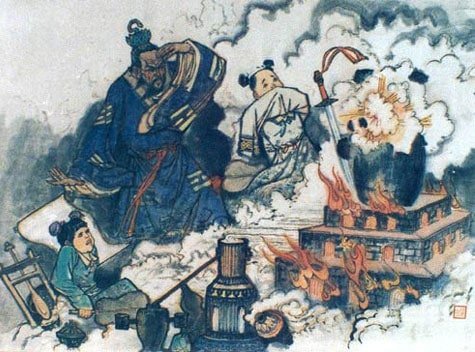
The beginning chemical explosive known as a gunpowder or black powder was made from sulfur, charcoal, and potassium nitrate (saltpeter). Gunpowder wasn't a sudden invention. The Chinese had used saltpeter since the middle of the first century AD in various medical treatments. Gunpowder was invented during the Tang dynasty in the 9th century, just information technology wasn't until the Song dynasty in the 11th century that the first recorded formula was documented. The Chinese used gunpowder and gunpowder-based weaponry as a military defense.
ane. Movable Type Printing
A major revolution in the history of printing came afterward the invention of movable clay blazon printing by Bi Sheng (990–1051) during the Northern Song dynasty (960–1127). The printing process consisted of iv stages: making the types, composing the text, printing, and retrieving the movable types. Afterward, in 1298, it was re-invented by Wang Zhen during the Yuan dynasty. He produced 100 copies of the Nong Shu or Book of Agriculture using more than xxx,000 wooden movable types. The book consists of over 60,000 Chinese characters. Metal movable type printing was invented during the Jin (1115–1234) and Southern Song (1127–1279) dynasties in the 12th century. Information technology was mostly fabricated of bronze and was used to print coin.
Conclusion
Ancient Chinese inventions revolutionized many industries that we take for granted today. Without paper, there would be no books, without the compass, traveling would have been curtailed, without printing, there would be no paper coin. The Chinese also invented lots of other things during the medieval menstruum, and that is why two very important inventions from this period have also been included. The world would be a very dissimilar place without these ancient and medieval Chinese inventions.
Source: https://www.ancienthistorylists.com/china-history/top-18-ancient-chinese-inventions/
0 Response to "The study of kites helped the ancient Chinese to develop effective uses of what part of a ship?"
Post a Comment